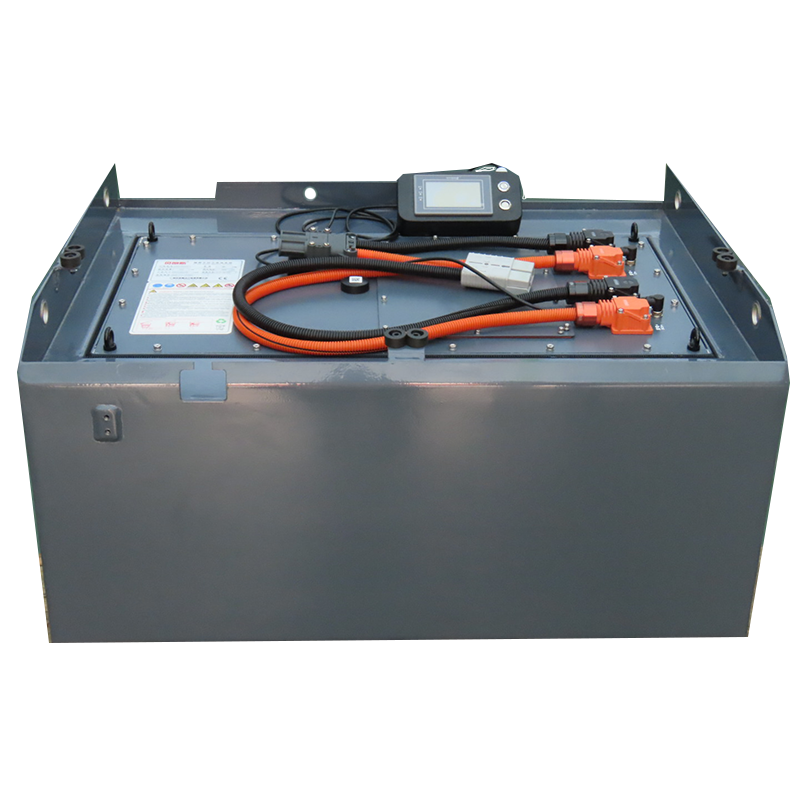
The proportion of lithium iron phosphate has witnessed new growth in the industrial lithium battery market
Time:2026-01-30 16:20:08
Browse:122
The latest industry data shows that the application proportion of lithium iron phosphate in the industrial lithium battery sector has exceeded 80%, far surpassing that of lithium cobalt oxide batteries and other battery types.
Driven by the dual forces of global energy transition and industrial intelligentization upgrade, the industrial lithium battery market is experiencing unprecedented development opportunities. The strong breakthrough of lithium iron phosphate materials has become the core driving force for industry growth. The latest industry data shows that the application proportion of lithium iron phosphate in the industrial lithium battery sector has exceeded 80%, far surpassing that of lithium cobalt oxide batteries and other battery types. It has risen from a "secondary option" to the "absolute main force" of the industrial lithium battery market, pushing the industrial lithium battery industry into a new stage of high-quality development and injecting strong momentum into the green transformation of the manufacturing sector.
The application scenarios of industrial lithium batteries cover multiple core areas such as industrial energy storage, new energy construction machinery, electric forklifts, and backup power for communication base stations. They have extremely high requirements for battery safety, cycle life, cost control, and environmental adaptability. Compared to lithium cobalt oxide batteries, lithium iron phosphate batteries inherently possess core advantages for industrial scenarios, which is also the key reason for their rapid market share capture and industry expansion. With the continuous iteration of technology and the continuous improvement of industrial support, the shortcomings of lithium iron phosphate have been gradually filled, further consolidating its market dominance, and enabling the industrial lithium battery market to break free from the previous homogenization competition predicament, forming a new growth pattern centered on technological innovation.
Reviewing the development history of the industrial lithium battery market, in the early stage, the market presented a "diverse coexistence" pattern, with lithium cobalt oxide batteries, lithium titanate batteries, and lithium iron phosphate batteries each occupying a certain area. However, as the requirements for battery safety in industrial scenarios have continuously increased and cost pressure has been continuously transmitted, the advantages of lithium iron phosphate batteries have gradually emerged. Especially since 2025, the proportion of lithium iron phosphate in the industrial lithium battery sector has rapidly increased from around 74% to over 81%, achieving a significant breakthrough in one year. This growth trend not only reflects the market's recognition of lithium iron phosphate technology but also reflects the upgrading direction of the industrial lithium battery market - prioritizing safety, cost-performance orientation, and adaptability to multiple scenarios.
During the rapid development of the industry, many questions have arisen. Based on the current market situation and industry trends, we address the core issues to help better understand the development logic of industrial lithium batteries and lithium iron phosphate.
Question 1: Why has lithium iron phosphate been able to stand out in the industrial lithium battery market and achieve a proportion exceeding 80%?
This phenomenon's occurrence is not accidental; it is the result of the combined effect of three factors: demand adaptation, technological breakthroughs, and policy guidance. From the demand side, the core application scenarios of industrial lithium batteries, such as construction machinery and industrial energy storage, have extremely high requirements for battery safety. Lithium iron phosphate batteries do not contain rare metals such as cobalt and nickel, have extremely strong thermal stability, and will not cause fires or explosions due to thermal runaway, perfectly meeting the safety requirements of industrial scenarios. This is its core competitiveness compared to lithium cobalt oxide batteries.
From the technical side, in recent years, lithium iron phosphate technology has achieved key breakthroughs, completely solving the previous shortcomings of poor low-temperature performance and insufficient energy density. Through electrolyte additives, electrode material modification, etc., the discharge efficiency of lithium iron phosphate batteries at -20℃ has increased from 80% to over 90%, breaking the application bottleneck in northern industrial scenarios; at the same time, its single-cell energy density has increased from 170Wh/Kg to around 260Wh/Kg, narrowing the gap with lithium cobalt oxide batteries and meeting the battery endurance requirements of industrial equipment. In addition, the cycle life of lithium iron phosphate batteries is far longer than that of lithium cobalt oxide batteries, meeting the long-term stable operation requirements of industrial equipment, further enhancing its market competitiveness.
From the policy side, China has clearly stipulated that public industrial equipment such as buses should not use lithium cobalt oxide batteries, providing a broad space for the iterative update of lithium iron phosphate batteries; Meanwhile, the promotion of green manufacturing and policies related to the dual-carbon goals is driving the acceleration of the electrification transformation in the industrial sector. The low cost and environmental friendliness of lithium iron phosphate are in line with the policy orientation, further promoting its market penetration. In addition, the cost of lithium iron phosphate batteries is about 30% lower than that of lithium cobalt oxide batteries, and in the large-scale application in the industrial sector, it can effectively reduce the equipment investment and operating costs of enterprises, which is also an important reason for its rapid market capture.
Question 2: Will the continuous increase in the proportion of lithium iron phosphate lead to a situation of homogenization competition in the industrial lithium battery market?
The answer is no. Although lithium iron phosphate dominates, the demand in the industrial lithium battery market shows a diversified feature. Different scenarios have different requirements for battery performance, which determines that the market will not fall into homogenization competition, but will develop towards a "customized for specific scenarios" direction. Currently, leading enterprises have begun to develop customized lithium iron phosphate battery products for different industrial scenarios - for example, for industrial energy storage scenarios, developing energy storage-type lithium iron phosphate batteries with high capacity and long cycle life; for construction machinery scenarios, developing high-rate, anti-vibration power-type lithium iron phosphate batteries; for communication base station scenarios, developing low-power, high-stability backup power-type lithium iron phosphate batteries.
At the same time, enterprises in the industry are gradually getting rid of the misconception of "price competition", and shifting to differentiated competition through technological innovation and service upgrades. For example, some enterprises focus on the research and development of high-density and high-strength technologies for lithium iron phosphate, improving the energy density and cycle life of the batteries, and creating high-end products; some enterprises improve their industrial chain layout, from cathode materials, electrolytes to battery packaging, achieving full chain self-control and reducing costs while ensuring product quality; some enterprises focus on after-sales services, providing integrated solutions such as battery operation and maintenance, and recycling for industrial customers, to enhance customer stickiness. Moreover, the iteration of new technologies such as solid-state batteries will inject new vitality into the market, promote the upgrade of lithium iron phosphate batteries to higher performance, further enrich market supply, and avoid homogenization competition.
In the future, with the continuous upgrading of technology and the continuous expansion of scenarios, the proportion of lithium iron phosphate in the industrial lithium battery field is expected to maintain a steady increase, but at the same time, industry risks need to be guarded against. Currently, the lithium iron phosphate industry faces the predicament of "increased production without increased revenue", with a significant decline in material prices, and the entire industry has fallen into widespread losses for three consecutive years. Although the demand explosion in 2025 will drive leading enterprises to operate at full capacity, the cost pressure has not been fundamentally relieved. In addition, the continuous expansion of industry production needs to be guarded against blind construction and "competitive overexpansion", promoting the healthy and orderly development of the industry.